 Save
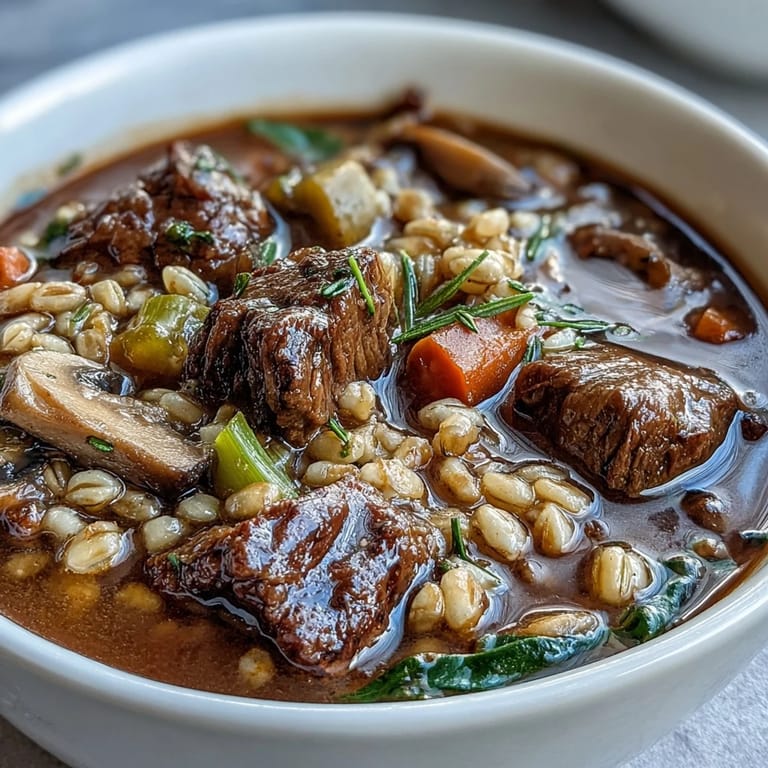
Save The winter my old radiator broke and I couldn't afford to fix it immediately, this soup became my survival strategy. I'd come home shivering to a barely fifty degree apartment, and the act of slowly simmering beef and barley on the stove wasn't just cooking, it was how I warmed the entire room. Something about that long gentle cook time, the way the barley swells and the beef turns from stubborn cubes into something that surrenders at the slightest touch, felt like a small rebellion against the cold.
I started making this soup regularly during Sunday meal prep sessions with my neighbor, who had this theory that soups are better when you have someone to swap kitchen stories with while the vegetables soften. We'd stand over our separate pots, each making our own versions, comparing who chopped their onions smaller or whose beef browned more evenly. Those long afternoons taught me that rushing this particular soup is a mistake. The low and slow approach isn't just a suggestion, it's what transforms a bowl of ingredients into something that feels like a proper meal.
Ingredients
- Beef stew meat: The chuck cut has the perfect fat ratio for long simmering, becoming tender without falling apart completely
- Pearl barley: Rinse it well to remove excess starch, and don't be alarmed by how much it expands during cooking
- Carrots: They add natural sweetness that balances the rich beef broth, so cut them uniformly for even cooking
- Celery: The foundation of flavor alongside onions, providing that classic aromatic base that makes soups taste homemade
- Onion: Yellow onions work best here as they mellow into sweetness rather than maintaining sharpness
- Garlic: Add it after the other vegetables have started softening so it doesn't burn and turn bitter
- Potatoes: They break down slightly and help naturally thicken the broth while absorbing all those savory flavors
- Mushrooms: They contribute an earthy depth that makes the soup taste like it's been cooking longer than it actually has
- Frozen peas: Add them at the very end so they maintain their bright color and sweet flavor
- Diced tomatoes: They're optional but add nice acidity and color, just drain them well first
- Beef broth: Use a good quality one or make your own, since it's the primary liquid and flavor carrier
- Bay leaves: Don't skip these as they add a subtle aromatic depth that's hard to place but noticeable when missing
- Dried thyme and parsley: These herbs work together to give the soup its comforting herbal backbone
- Salt and pepper: Season gradually throughout cooking, as the flavor intensifies as the soup reduces
- Olive oil: Use this to brown the beef properly, which creates those flavorful browned bits on the bottom of the pot
Tired of Takeout? 🥡
Get 10 meals you can make faster than delivery arrives. Seriously.
One email. No spam. Unsubscribe anytime.
Instructions
- Sear the beef with intention:
- Get that olive oil shimmering in your heavy pot, then add the beef cubes in batches so they sear rather than steam. Let them develop a deep brown crust on at least two sides, listening for that satisfying sizzle that tells you flavor is being created right there in the bottom of your pot. Set aside the browned meat but don't wipe the pot clean.
- Build the vegetable foundation:
- Those browned bits left in the pot are about to become the flavor base of your entire soup. Toss in the onions, carrots, celery, and mushrooms, letting them cook until they're softened and starting to turn golden at the edges, about five minutes of occasional stirring.
- Add the garlic carefully:
- Stir in the minced garlic and let it cook for just one minute until fragrant. You'll know it's ready when that familiar garlicky aroma wafts up, but watch closely because garlic goes from perfect to burnt quickly.
- Combine everything with the broth:
- Return the beef to the pot along with the potatoes, rinsed barley, drained tomatoes if you're using them, and all that beef broth. Drop in the bay leaves and dried herbs, then bring everything to a boil with excitement.
- Let it simmer slowly:
- Reduce the heat to the lowest setting, cover the pot with a slight gap for steam to escape, and let it gently bubble away for an hour. Stir it occasionally, and watch as the barley begins to swell and the broth starts to take on that velvety thickness that tells you something good is happening.
- Finish with the final touches:
- Stir in the frozen peas and give the soup a thorough taste test. Add salt and pepper as needed, then continue cooking uncovered for another twenty to thirty minutes until both the barley and beef are fork tender. Remove the bay leaves before serving, or just warn everyone they're there.
 Save
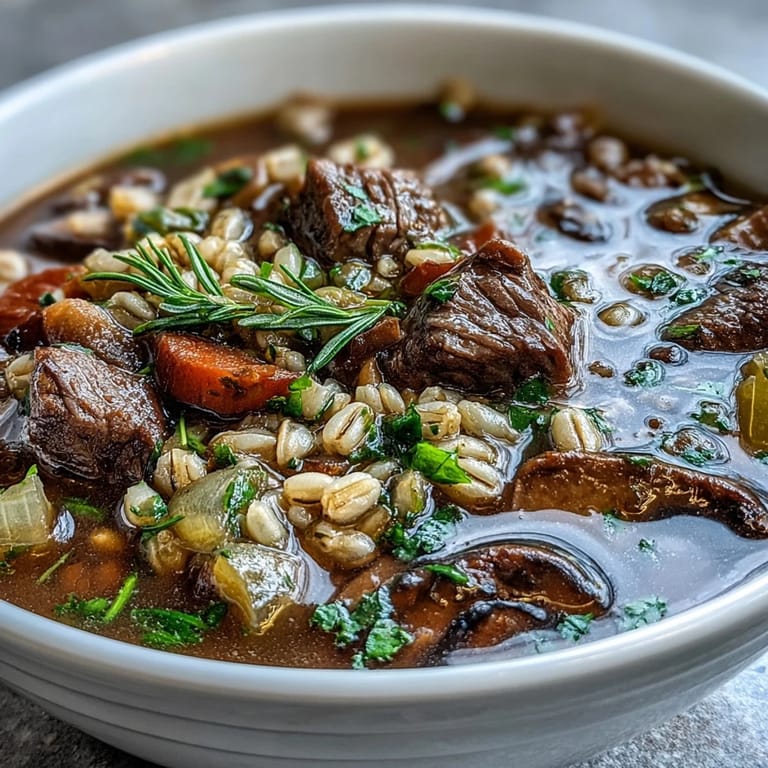
Save This soup became the thing I brought to every potluck and sick friend for years, partly because it travels well but mostly because people started specifically requesting it. There's something about a bowl of beef and barley soup that feels like being hugged from the inside out, the way the rich broth coats your spoon and the tender beef practically dissolves on your tongue. My partner now requests it every time the weather forecast drops below forty degrees, and I've learned to always keep barley in the pantry just for those moments.
Making It Your Own
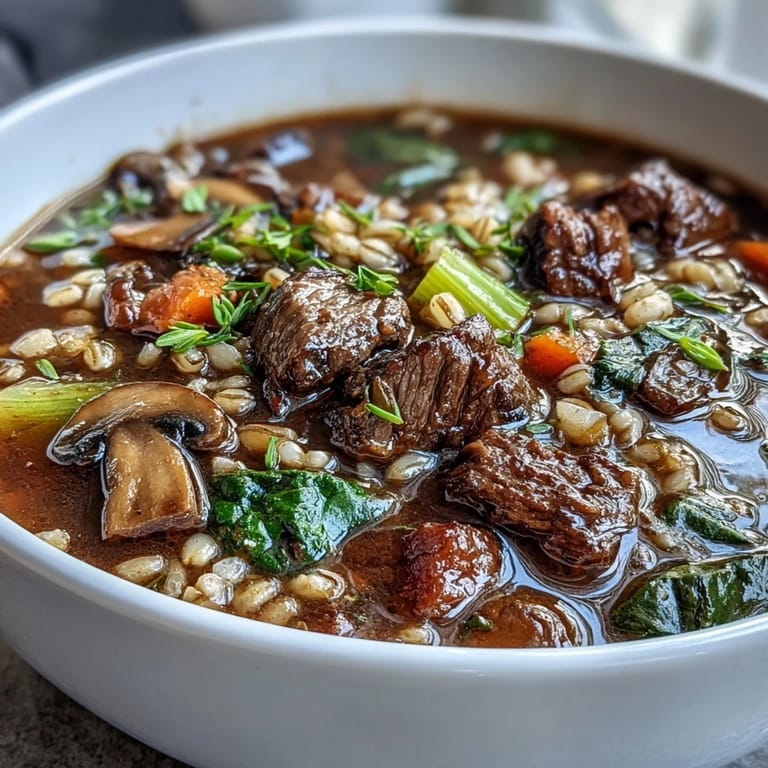
The beauty of this soup base is that it's incredibly forgiving to substitutions. I've swapped regular potatoes for sweet potatoes when that's what I had on hand, and the slight sweetness was actually lovely against the savory beef. Sometimes I'll add a parsnip or two for extra earthiness, or throw in a handful of spinach right at the end just to feel better about serving it to my kids.
The Bread Question
A truly great beef and barley soup deserves proper bread accompaniment, in my opinion. A crusty sourdough for dipping is ideal, but honestly even a simple slice of buttered toast works perfectly when you need something to soak up that last bit of broth from the bottom of your bowl. The way the bread softens slightly as it sits in the hot soup is half the pleasure of the experience.
Leftover Strategy
This soup thickens considerably in the refrigerator, which I actually prefer because it feels more like a stew the next day. When reheating, add a splash of water or additional broth to reach your desired consistency. The flavors also have time to marry and deepen, making leftovers arguably better than the fresh pot.
- Freeze in individual portions for emergency weeknight meals
- Portion into glass jars and refrigerate up to four days
- Label your freezer containers with the date because this soup freezes so well you might forget when you made it
 Save
Save There's a particular comfort in knowing that a few simple ingredients, given enough time and attention, can transform into something that nourishes you completely. This soup has gotten me through cold winters, busy weeks, and countless moments when I needed something warm and steady in an unpredictable world.
Recipe FAQs
- → How long does it take to make?
The total time is about 2 hours, with 20 minutes for prep and 1 hour 40 minutes for cooking. Most of that is hands-off simmering time.
- → Can I use a different cut of beef?
Yes, chuck roast or round steak work well. Just cut into cubes and brown before adding to the soup.
- → Do I need to soak the barley first?
No, pearl barley cooks directly in the soup and will become tender during the simmering process.
- → Can I make this in a slow cooker?
Absolutely. Brown the beef first, then add everything to the slow cooker and cook on low for 7-8 hours.
- → How should I store leftovers?
Refrigerate for up to 4 days or freeze for up to 3 months. The barley may absorb more liquid when stored, so add more broth when reheating.
- → What can I serve with this?
Crusty bread is perfect for soaking up the broth. A crisp green salad makes a nice accompaniment.