 Save
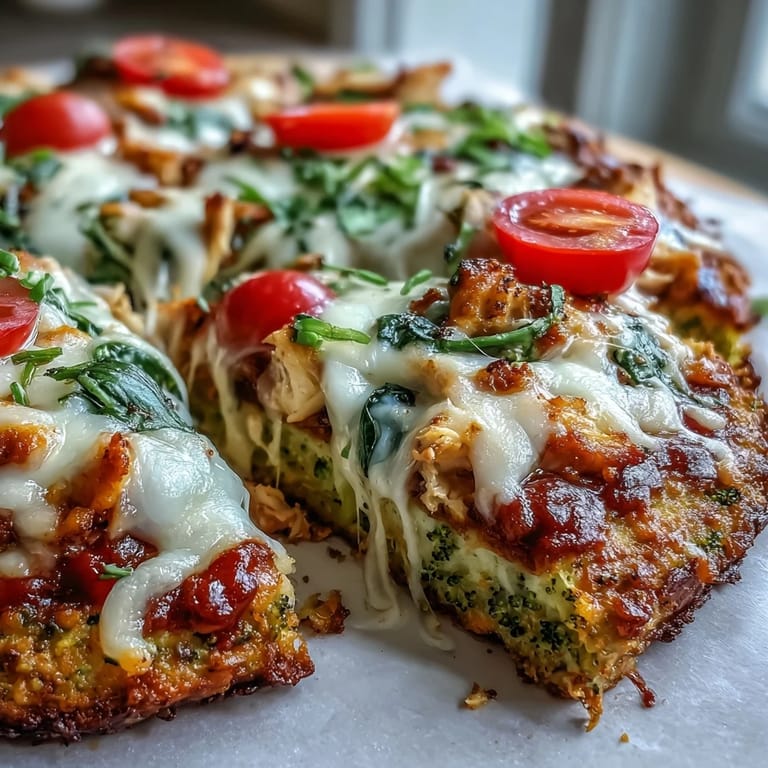
Save My kitchen experiment with low-carb eating hit a wall around week three when I realized I was tired of lettuce wraps and cauliflower rice. Then one Tuesday evening, while staring at rotisserie chicken and leftover roasted broccoli, something clicked—what if I mashed them together with cheese and egg to build an actual pizza crust? The result was so unexpectedly crispy and satisfying that I've made it dozens of times since, each iteration a little more refined.
I'll never forget serving this to my sister, who'd been skeptical about anything "health food" related, and watching her reach for a second slice without checking the ingredients first. That moment made me realize this isn't a compromise—it's genuinely delicious pizza that happens to be good for you.
Ingredients
- Cooked broccoli florets (2 cups, finely chopped): This becomes the structural backbone of your crust, adding fiber and earthiness while keeping carbs minimal—pulse it small so there are no chunky surprises.
- Cooked chicken breast (1½ cups, finely shredded): Rotisserie chicken works beautifully and saves time; the moisture content helps bind everything together without making it dense.
- Large egg (1): This is your binder and leavening agent, creating just enough structure so the crust doesn't fall apart when you pick up a slice.
- Shredded mozzarella cheese (½ cup for crust, 1 cup for topping): Use whole milk mozzarella—it melts smoother and creates those satisfying stretchy threads.
- Grated Parmesan cheese (¼ cup): This adds a nutty sharpness that prevents the crust from tasting one-dimensional or overly mild.
- Dried oregano (½ teaspoon): Sprinkle directly into the crust mixture so the flavor distributes throughout every bite.
- Garlic powder (½ teaspoon): Don't skip this—it's subtle but essential for that savory pizza foundation you're craving.
- Salt and black pepper (¼ teaspoon each): Taste as you go because the cheese adds saltiness too.
- Sugar-free tomato sauce (½ cup): Any quality pizza sauce works, but taste yours first to ensure it's not too acidic or artificial-tasting.
- Toppings (red onion, bell pepper, cherry tomatoes, black olives, spinach): These stay bright and crisp because the second bake is short—fresh vegetables with minimal cooking time taste so much better.
- Dried Italian herbs (1 teaspoon): Or use fresh basil added after baking for a more vibrant flavor.
Tired of Takeout? 🥡
Get 10 meals you can make faster than delivery arrives. Seriously.
One email. No spam. Unsubscribe anytime.
Instructions
- Heat your oven and prepare the surface:
- Preheat to 425°F and line your baking sheet with parchment paper so the crust releases cleanly—this step matters more than you'd think when you're working with a vegetable-based dough.
- Build the crust mixture:
- Combine the chopped broccoli, shredded chicken, egg, both cheeses, oregano, garlic powder, salt, and pepper in a bowl and stir until everything is evenly distributed and sticky. Don't overmix, but make sure there are no pockets of unmixed egg white.
- Shape and pre-bake:
- Press the mixture onto your prepared sheet into a 12-inch round about ½ inch thick, and bake for 20 minutes until the edges are golden and the center feels firm when you touch it. The crust will smell savory and slightly browned.
- Add sauce and cheese:
- Spread the tomato sauce evenly over the warm crust, then top with mozzarella—this creates a base layer that keeps vegetables from sliding around.
- Layer your toppings strategically:
- Arrange the sliced onion, bell pepper, tomatoes, olives, and spinach in whatever pattern feels right, keeping the spinach toward the edges since it wilts quickly. Sprinkle Italian herbs over everything.
- Finish baking:
- Return to the oven for 8 to 10 minutes until the cheese bubbles at the edges and the vegetables are slightly softened. Watch it the first time you make it so you learn what bubbling looks like in your particular oven.
- Cool briefly and finish:
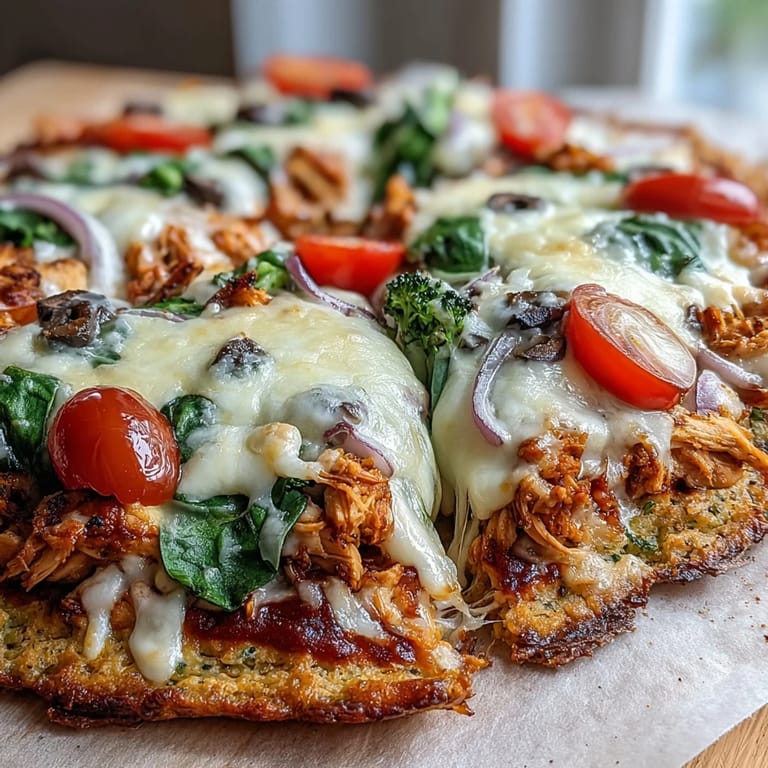
- Let it rest for 2 to 3 minutes so the cheese sets slightly, then add fresh basil or chili flakes if you want heat or brightness. Slice with a sharp knife or pizza cutter and serve immediately.
 Save
Save There's something magical about biting into a pizza slice and tasting vegetables you thought you hated—broccoli becomes almost nutty, and the whole thing feels substantial enough to anchor a meal. My partner, who claims he doesn't like anything "weird," has stopped asking what the crust is made of and just asks when I'm making it again.
Why This Crust Works Differently
Unlike traditional cauliflower pizza crust, which can turn watery and bitter, broccoli brings a sturdier fiber structure and milder flavor that plays well with chicken. The shredded chicken binds everything together while adding protein density that keeps you satisfied for hours afterward, not just until the next snack.
Timing and Temperature Matter More Than You'd Think
The oven temperature of 425°F is hot enough to crisp the edges without drying out the vegetables on top. If your oven runs cool, add a couple of minutes to both baking phases, but don't go above 450°F or the cheese will brown too fast and the crust edges can burn.
Customization That Always Works
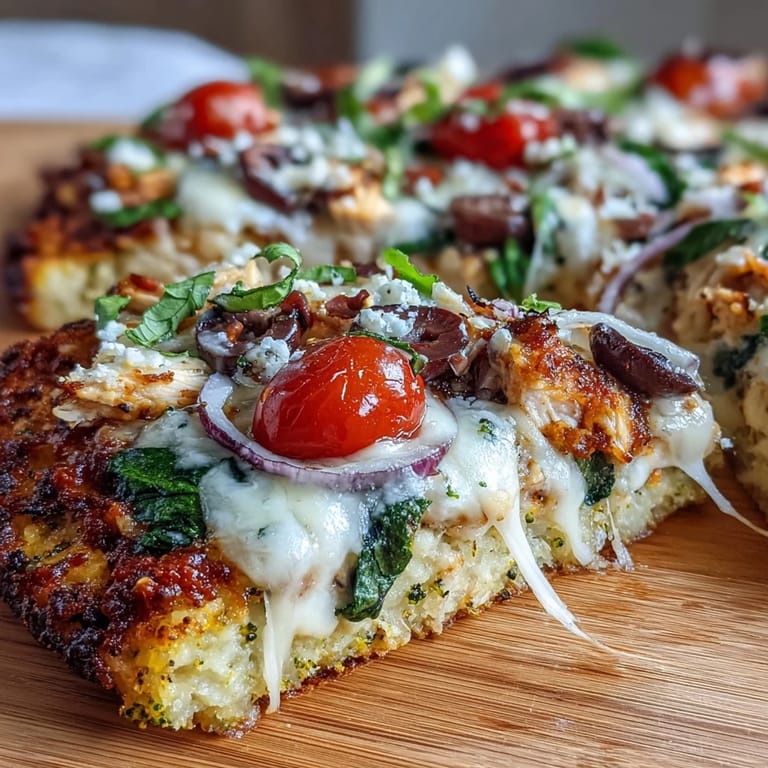
The beauty of this pizza is that whatever vegetables you love will work beautifully, and the ratio of crust to toppings means you're never overwhelmed by bread. Some of my favorite variations swap the tomato sauce for pesto, add sun-dried tomatoes, or pile on mushrooms and caramelized onions.
- Prep your toppings before you even start the crust so you're not rushing while the base bakes.
- Slice vegetables thin so they soften slightly during that second bake without becoming mushy.
- Leftover slices reheat perfectly in a toaster oven at 375°F for about 5 minutes.
 Save
Save This pizza proves that eating well doesn't mean sacrificing flavor or the joy of gathering around food you actually want to eat. Once you've made it once, you'll understand why it's become my go-to weeknight dinner and my secret weapon for impressing people who think low-carb eating is boring.
Recipe FAQs
- → What makes this crust different from traditional pizza?
The crust combines finely chopped cooked broccoli with shredded chicken, egg, and cheeses instead of wheat flour. This creates a protein-rich, gluten-free base with significantly fewer carbohydrates while maintaining a satisfying texture.
- → Can I prepare the crust in advance?
Yes, you can prepare the crust mixture and shape it ahead of time. Wrap the formed crust tightly and refrigerate for up to 24 hours before baking. Alternatively, bake the crust completely, cool, and freeze for future use.
- → Is this suitable for meal prep?
The finished pizza stores well in the refrigerator for 2-3 days. Reheat in a 350°F oven for 10-15 minutes to restore crispness. The crust texture is best when reheated in the oven rather than a microwave.
- → Can I use frozen broccoli?
Frozen broccoli works well—just thaw and drain thoroughly before chopping. Excess moisture should be removed to prevent a soggy crust. Squeezing the chopped broccoli in a clean towel helps achieve the right consistency.
- → What other toppings work with this crust?
The versatile crust pairs beautifully with mushrooms, artichoke hearts, grilled zucchini, or any traditional pizza toppings. Just avoid overly watery vegetables that might make the crust soggy during baking.
- → How do I prevent the crust from becoming soggy?
Pre-baking the crust for 20 minutes until firm creates a solid foundation. Additionally, pat cooked broccoli dry and use shredded chicken that isn't too moist. These steps ensure a sturdy base that holds toppings well.