 Save
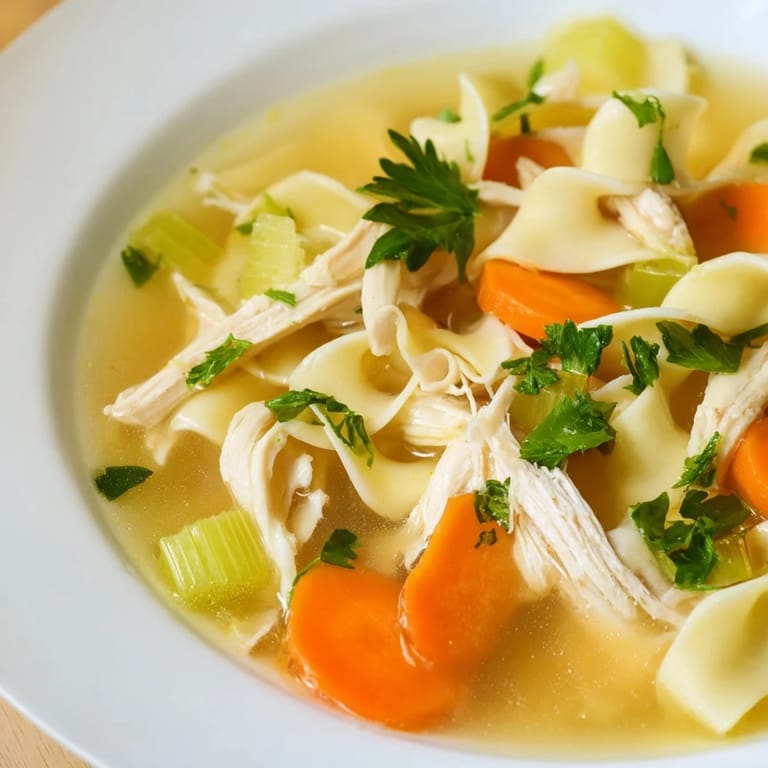
Save There's something about the sound of a wooden spoon scraping the bottom of a pot that makes me feel like I'm doing something right in the kitchen. My grandmother used to make this soup on lazy Sunday afternoons, and I'd watch her toss in vegetables without measuring anything, just knowing by instinct when the chicken was ready to shred. Years later, I realized I was trying to recreate that exact moment every time I made it, and somewhere along the way, I stopped worrying about perfection and started just enjoying the warmth of it.
I made this for my roommate during finals week when she was too stressed to eat anything substantial, and she had three bowls before even realizing it. There's a quiet power in feeding someone something warm and real when they need it most.
Ingredients
- Chicken breasts or thighs: Two boneless, skinless breasts work perfectly, but if you're in the mood for deeper flavor and don't mind a slightly longer cook, thighs are your secret weapon.
- Carrots and celery: These are your flavor foundation; don't skip them or rush the sauté.
- Yellow onion: One small one, diced fine, becomes almost invisible but carries all the sweetness.
- Garlic: Two cloves minced, just enough to whisper in the background.
- Low-sodium chicken broth: Six cups total; low-sodium lets you control the salt and keeps the broth from tasting tinny.
- Wide egg noodles: About two cups dry, they have character and hold onto the broth better than thin pasta.
- Bay leaf: Just one, but it's non-negotiable; remove it before serving.
- Dried thyme: Half a teaspoon feels like nothing until you taste how it ties everything together.
- Black pepper and salt: Taste as you go; every pot of broth is different.
- Fresh parsley: Two tablespoons in the pot, more for the top; it's the bright note that wakes everything up.
- Olive oil: One tablespoon, just enough to keep things from sticking without making the broth greasy.
Tired of Takeout? 🥡
Get 10 meals you can make faster than delivery arrives. Seriously.
One email. No spam. Unsubscribe anytime.
Instructions
- Build your base:
- Heat the olive oil in your large pot over medium heat, then add the onions, carrots, and celery. You're looking for them to soften and turn translucent, which takes about four to five minutes; the kitchen will start to smell like something good is happening.
- Bloom the garlic:
- Stir in your minced garlic and let it cook for just one minute until fragrant; this is the moment right before everything gets delicious.
- Add the chicken and broth:
- Drop in your whole chicken breasts, pour in the broth, then add the bay leaf, thyme, salt, and pepper. Bring everything to a boil, then turn the heat down and let it simmer uncovered for fifteen to twenty minutes until the chicken is cooked through.
- Shred and return:
- Pull the chicken out with tongs and set it on a cutting board to cool slightly, then use two forks to pull it apart into tender shreds. Return it to the pot where it belongs.
- Cook the noodles:
- Add your egg noodles and simmer for seven to eight minutes until they're tender but not mushy; they'll continue cooking slightly even after you turn off the heat.
- Finish with fresh herbs:
- Stir in your fresh parsley, taste the soup, and adjust the salt and pepper if it needs it. Fish out that bay leaf before serving.
 Save
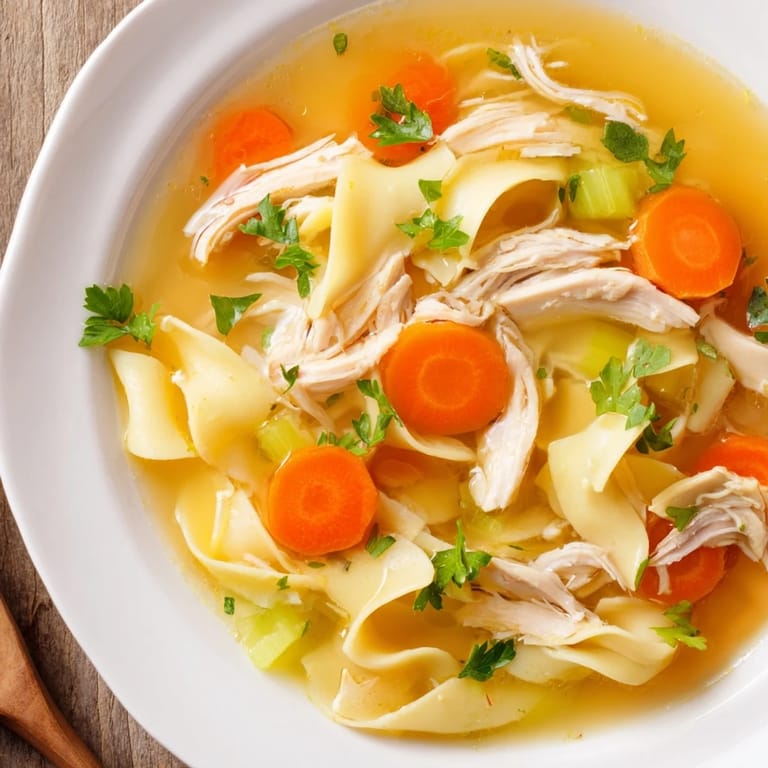
Save My neighbor brought me a bowl of this when I first moved in, and I knew right then that I wanted to be the kind of person who shows up with something warm. Soup has a way of saying things you don't have to speak out loud.
The Chicken Question
Breasts are leaner and cook faster, which is perfect when you're hungry and in a hurry. But if you have time, thighs give you a richer broth and stay juicier even if you accidentally overcook them a little. I've learned that the best choice is whatever you have thawed in your fridge, because the soup only gets made if you actually make it.
Customizing Your Bowl
This soup is forgiving in the best way; it genuinely wants you to make it your own. Frozen peas or corn tossed in at the very end add color and sweetness, fresh lemon juice brightens everything if your broth is feeling flat, and a small handful of spinach wilts right in if you want something green. I once added leftover roasted mushrooms and it was unexpectedly perfect. The foundation is strong enough to handle your experiments.
Serving and Storage
Ladle it into bowls while it's hot and garnish with a little extra parsley; this soup doesn't need anything fancy, just crusty bread on the side and maybe some grated cheese if you're feeling it. Leftovers keep well in the fridge for three days, and it reheats gently on the stove with a splash of broth to loosen it back up.
- Pair it with good bread and you've got a complete meal.
- Make a double batch on a quiet weekend and portion it out for the week ahead.
- This is the soup you make when you want to feel taken care of, even if you're cooking for yourself.
 Save
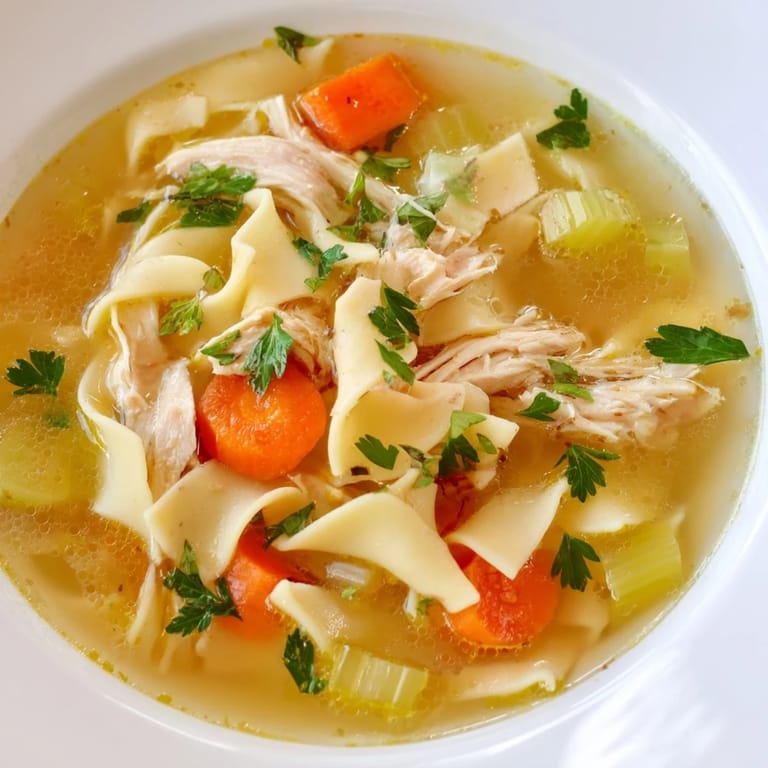
Save Make this when you need comfort, when someone else needs it, or just because it's the kind of soup that turns an ordinary evening into something worth remembering. That's really all there is to it.
Recipe FAQs
- → Can I use chicken thighs instead of breasts?
Yes, chicken thighs add richer flavor and remain tender during simmering. Both work well in this preparation.
- → How do I know when the noodles are cooked?
Simmer the noodles until they are tender but not mushy, usually about 7–8 minutes, checking texture by tasting.
- → Can I make this gluten-free?
Absolutely, substitute egg noodles with gluten-free noodle alternatives to suit dietary needs.
- → What is the purpose of sautéing the vegetables first?
Sautéing softens the carrots, celery, and onion, enhancing their natural sweetness and depth before simmering.
- → How can I enhance the flavor further?
Adding bone-in chicken or a splash of lemon juice before serving intensifies richness and brightness.
- → Is it necessary to remove the bay leaf before serving?
Yes, removing the bay leaf prevents any woody texture or bitter aftertaste in the final dish.