 Save
Save There's a particular Tuesday evening I keep returning to—the kind where everything felt rushed, but somehow the simplest dinner became the most comforting. My roommate had just moved in, the kitchen was barely unpacked, and I wanted something that felt both impressive and honest. Fettuccine Alfredo seemed impossible until I realized it wasn't; just butter, cream, cheese, and pasta playing their parts in perfect harmony. That night taught me that sometimes the most elegant meals hide behind the fewest ingredients.
I made this for my sister during her first week at her new place, when she was overwhelmed and exhausted. She sat at my kitchen counter watching the cream turn golden, breathing in that buttery garlic smell, and something shifted in her expression. Food doesn't always need to be complicated to mean something.
Ingredients
- Fettuccine (400 g): The flat ribbons catch and hold the sauce in a way thinner pasta never could; don't skip the al dente part, or it'll turn mushy once it hits the heat again.
- Unsalted butter (60 g): Use real butter, not margarine—it's the foundation of everything, and its flavor will shine through without competition.
- Heavy cream (250 ml): The full-fat version is non-negotiable here; lighter cream breaks and separates, leaving you with a greasy puddle.
- Freshly grated Parmesan (120 g): Pre-grated cheese has anti-caking agents that prevent it from melting smoothly into the sauce; grate it yourself and watch the difference.
- Garlic clove (1, minced): Optional, but it adds a whisper of flavor that makes people pause and ask what's in this.
- Salt and black pepper: Taste as you go; the cheese brings its own salt, so you'll need less than you'd think.
- Nutmeg (pinch): A secret ingredient that sounds strange until you taste it—it rounds out the flavor and adds warmth.
- Chicken breasts (2, optional): Sliced thin and sautéed golden, they add heartiness without overwhelming the delicate sauce.
- Olive oil (2 tbsp): For cooking the chicken until it's golden and rested, so it stays tender.
- Fresh parsley and extra Parmesan for garnish: These finish the dish with color and a final hit of flavor.
Tired of Takeout? 🥡
Get 10 meals you can make faster than delivery arrives. Seriously.
One email. No spam. Unsubscribe anytime.
Instructions
- Salt the water generously:
- Fill your pot three-quarters full with water and add salt until it tastes like the sea. This is your only chance to season the pasta itself. Bring it to a rolling boil.
- Cook the fettuccine to al dente:
- Follow the package timing, then taste a strand—it should have a gentle resistance when you bite it, not be soft all the way through. Reserve a cup of starchy pasta water before draining; this liquid is your secret weapon for silky sauce.
- Sear the chicken (if using):
- Pat the breasts dry and season them boldly with salt and pepper on both sides. Heat olive oil in a skillet until it shimmers, then lay the chicken in without moving it; let it develop a golden crust for 6-7 minutes before flipping. Once cooked through, let it rest on a plate for a few minutes so the juices settle back in, then slice it thinly.
- Build the sauce base:
- In a large pan over medium-low heat, melt the butter slowly. If you're using garlic, add it now and let it sauté for about 30 seconds until fragrant; don't let it brown or it'll turn bitter. The low heat here is crucial—you're building, not rushing.
- Bring the cream to a simmer:
- Pour in the heavy cream and stir constantly for 2-3 minutes, watching as the sauce begins to thicken slightly and bubble gently around the edges. You're incorporating air and beginning the emulsification process.
- Add the cheese slowly:
- This is where patience matters most. Reduce the heat to low and whisk in the Parmesan a handful at a time, stirring until each addition melts completely before adding more. If you dump it all in at once, you'll end up with clumpy, broken sauce. Season with salt, pepper, and a pinch of nutmeg.
- Toss the pasta in the sauce:
- Add the hot fettuccine and toss gently to coat every strand. If the sauce seems too thick, add your reserved pasta water a splash at a time until you reach a consistency that clings to the pasta without pooling on the plate.
- Plate and serve immediately:
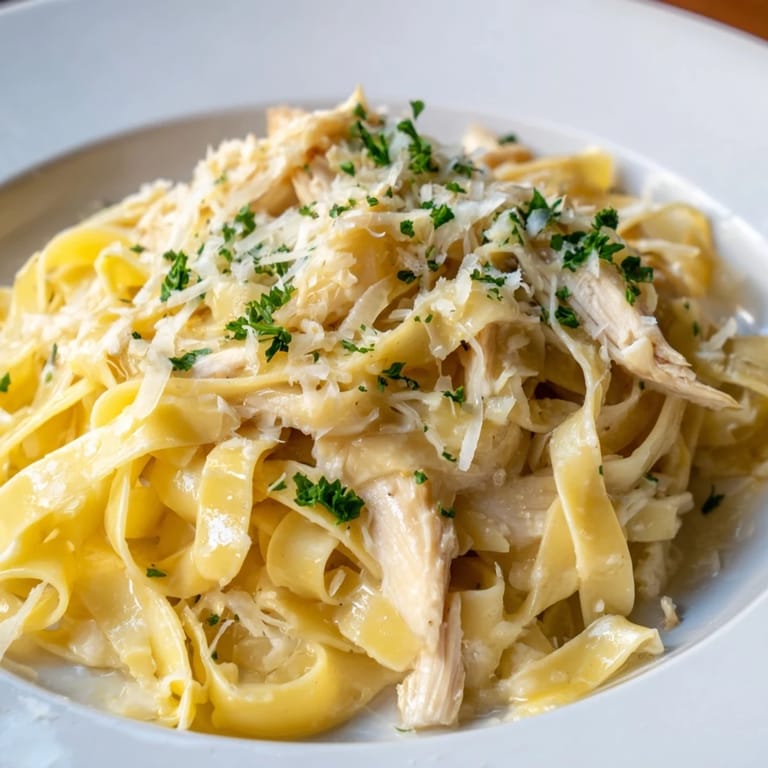
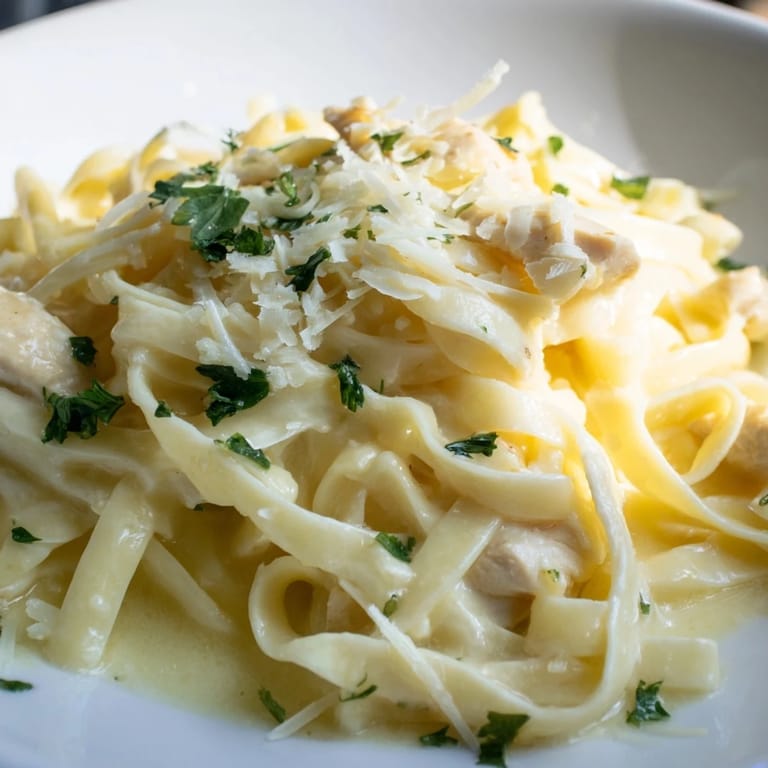
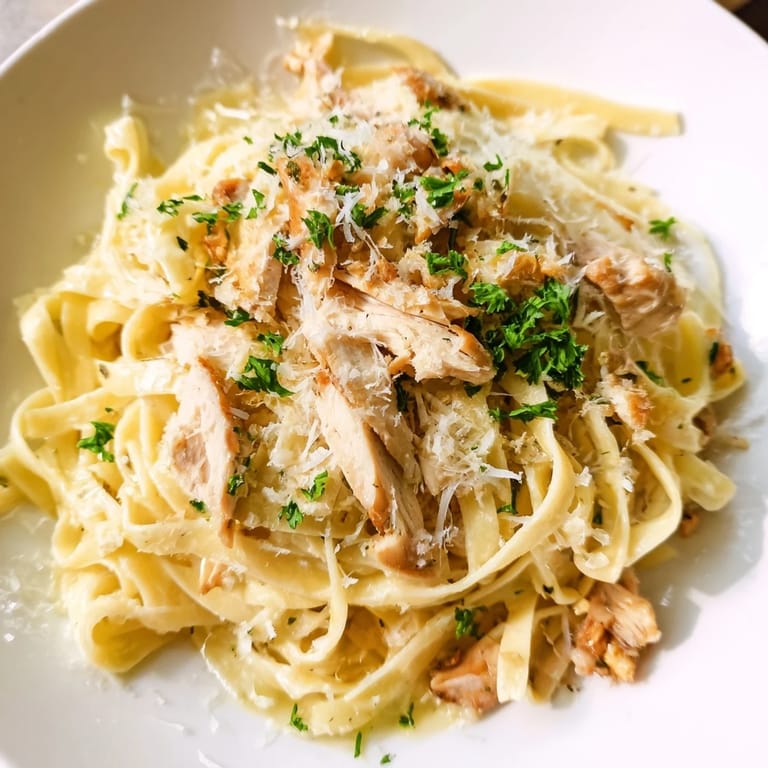
- Transfer to bowls or plates while everything is still hot. Top with sliced chicken if you've made it, scatter fresh parsley over everything, and finish with a generous handful of freshly grated Parmesan. Don't wait—this dish is best the moment it hits the table.
 Save
Save One rainy Sunday, I made this for a friend who'd just ended a long relationship. We sat quietly while she ate, and halfway through the bowl, she looked up and said, 'I forgot food could taste this good.' That's when I understood—sometimes simple dishes carry the weight of caring.
The Science of Silky Sauce
Fettuccine Alfredo works because butter, cream, cheese, and starch perform an intricate dance together. The emulsification that keeps the sauce smooth relies on the fat in the cream, the proteins in the cheese, and the starch from the pasta water all binding together. When any of these elements are neglected, the sauce separates and looks broken. This recipe isn't just delicious—it's a practical lesson in how flavors and textures build on each other, one deliberate step at a time.
Variations That Still Feel Honest
I've learned that Alfredo is flexible without becoming unrecognizable. Some nights I sauté sliced mushrooms in the butter before adding cream, letting them soften and deepen the sauce with earthiness. Other times, I'll toss in a handful of peas at the very end—they warm through gently and add color and sweetness. One winter, I swirled in some truffle oil right before serving, and it transformed the dish into something that felt luxurious without being pretentious.
Pairing and Serving
This dish pairs beautifully with crisp white wines like Pinot Grigio or Vermentino, which cut through the richness and refresh your palate between bites. A simple green salad on the side adds freshness and prevents the meal from feeling too heavy. For company, I plate everything carefully, making sure the sauce glistens and the parsley looks vibrant—presentation matters because people eat with their eyes first.
- Serve immediately after plating; Alfredo doesn't stay creamy if it sits.
- If you're feeding a crowd, keep everything warm separately and combine right before serving.
- Leftovers reheat gently in a low oven with a splash of cream, though nothing quite matches the first moment.
 Save
Save Fettuccine Alfredo reminds me that cooking doesn't need to be complicated to be meaningful. It teaches you to respect your ingredients and trust the process, and in return, it delivers something that feels both effortless and deeply satisfying.
Recipe FAQs
- → How can I make the sauce creamier?
Simmer the butter and cream gently, gradually whisk in freshly grated Parmesan, and add reserved pasta water a little at a time to reach desired thickness.
- → Can garlic be omitted from the sauce?
Yes, garlic is optional and can be left out without compromising the rich buttery flavor of the sauce.
- → What’s the best way to cook the chicken breasts?
Sauté chicken over medium-high heat until golden and cooked through, about 6-7 minutes per side, then rest before slicing thinly.
- → Are there alternatives to Parmesan cheese?
Pecorino Romano can be used for a sharper cheese flavor that complements the creamy sauce well.
- → How do I prevent the pasta from sticking together?
Cook pasta until al dente in well-salted water, reserve some pasta water, then toss immediately with sauce to keep it smooth and separate.