 Save
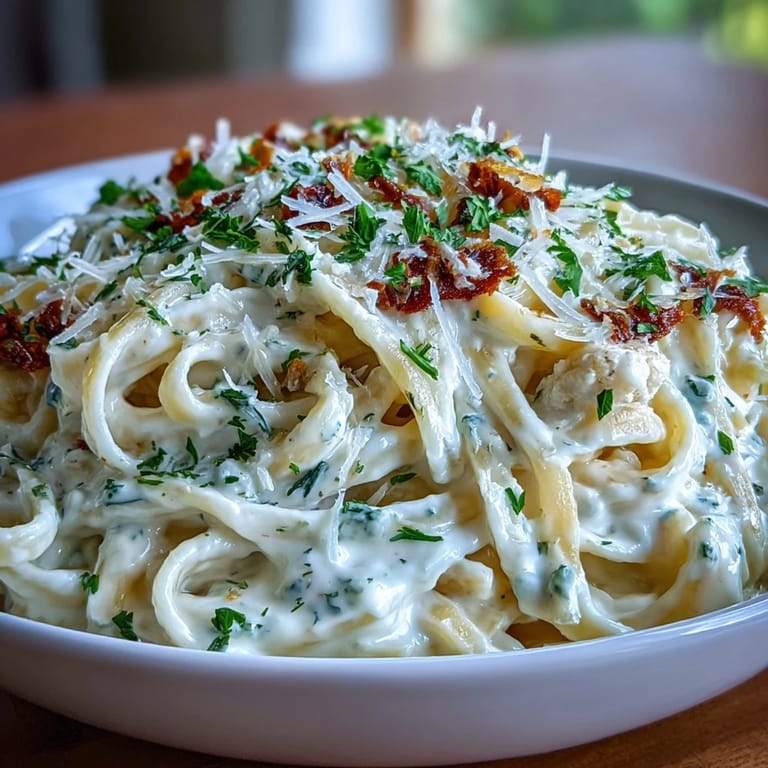
Save One Tuesday night, I stood in my kitchen staring at a half-head of cauliflower that needed rescuing, and a craving for something creamy and comforting that wouldn't leave me feeling heavy. I'd been scrolling through wellness blogs and kept stumbling on the same tired phrases about guilt-free this and clean-eating that, but what caught my attention was the pure simplicity of blending roasted vegetables into something luxurious. That night, I made this sauce almost by accident, and it tasted like I'd discovered something entirely mine.
I made this for my sister who'd recently decided to cut back on heavy foods, and watching her twirl those fettuccine strands and close her eyes for a moment of pure pleasure—that's when I knew this wasn't just a recipe, it was something that could shift how people think about comfort food. She asked for the recipe before she'd even finished her plate, which felt like the highest compliment.
Ingredients
- Cauliflower florets: The star of the show, and they soften completely into a cloud of richness when cooked properly, which is why this dish even works in the first place.
- Garlic and onion: These build the foundation of flavor, becoming sweet and mellow once boiled, adding depth without any sharp edges.
- Unsalted butter: Two tablespoons might seem modest, but it's the bridge between the vegetables and cream, adding that essential silky texture.
- Parmesan cheese: The umami bomb that ties everything together, so use the best you can find since it really does matter here.
- Milk: Dairy or plant-based both work beautifully as the liquid that brings the blended cauliflower to pourable consistency.
- Fettuccine or linguine: The broad ribbons catch and hold the sauce better than thin pasta, so don't skimp on choosing the right shape.
- Salt, pepper, and nutmeg: Salt brings out the sweetness of the cauliflower, pepper adds a gentle heat, and that whisper of nutmeg feels almost like a secret ingredient that nobody can quite name.
Tired of Takeout? 🥡
Get 10 meals you can make faster than delivery arrives. Seriously.
One email. No spam. Unsubscribe anytime.
Instructions
- Boil your vegetables until completely tender:
- Bring a large pot of salted water to a rolling boil, then add your cauliflower florets, garlic, and onion together. You want them cooking for a full 8–10 minutes until the cauliflower is soft enough to break with just a wooden spoon—this is what gives the sauce its silky character.
- Transfer to your blender:
- Use a slotted spoon to scoop out the vegetables, letting the cooking water drain away, and slide them into your blender. Leave that starchy water in the pot because you'll need it later.
- Blend until completely smooth:
- Add the butter, Parmesan, milk, salt, pepper, and nutmeg, then blend on high until the mixture transforms into something creamy and velvety with no visible vegetable pieces. If it feels too thick, add a splash of that reserved cooking water and blend again.
- Cook your pasta while you finish the sauce:
- In the same pot you used for the vegetables, cook your pasta according to package directions until it's al dente, meaning it still has a slight resistance when you bite it. Before draining, measure out about 1 cup of the starchy pasta water and set it aside.
- Combine everything together:
- Return the drained pasta to the pot, pour the cauliflower sauce over it, and toss everything with a wooden spoon until every strand is coated. Add the reserved pasta water a little at a time until you reach the creaminess you want, because the sauce will continue to thicken slightly as it sits.
- Taste and serve:
- Before plating, taste a small bite and adjust the salt and pepper as needed since different cheeses and milks behave differently. Serve immediately while it's hot, with fresh parsley scattered on top and extra Parmesan if you're feeling generous.
 Save
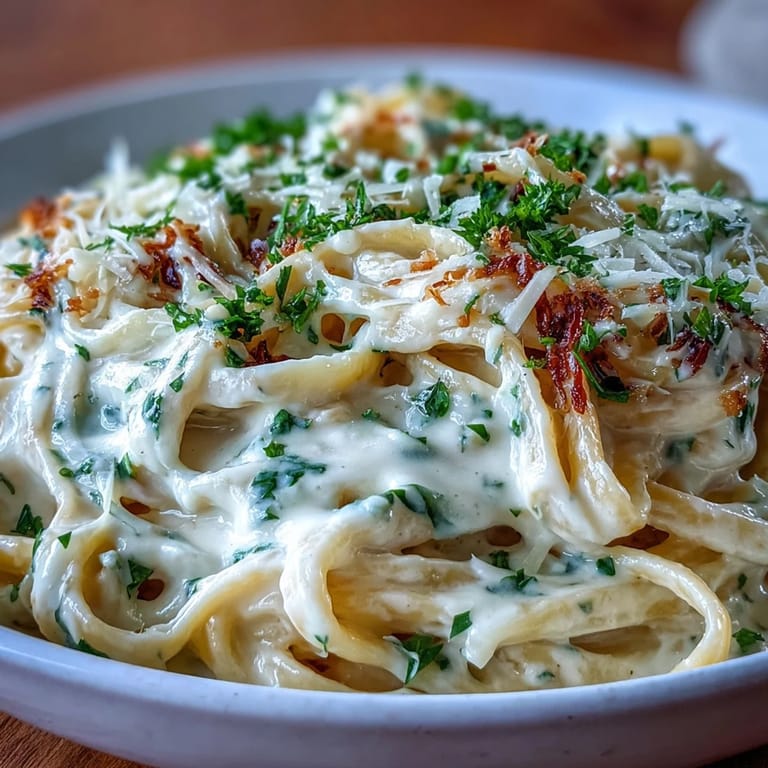
Save There's something almost magical about how a humble cruciferous vegetable can transform into something that tastes like it came from an Italian restaurant kitchen, and yet it lives in your regular Tuesday night. I've watched people's skepticism melt away the moment they take that first bite, and that's when I know I'm doing something right in the kitchen.
Making This Dish Your Own
The beauty of this sauce is that it's a canvas waiting for your personal touches, not a rigid formula that demands obedience. I've learned that you can fold in sautéed mushrooms for earthiness, scatter steamed broccoli for a vegetable-forward twist, or even add a handful of spinach right before serving and let the heat wilt it gently. Each addition tells a different story about who's cooking and what they're hungry for that evening.
Adapting for Dietary Needs
Going vegan with this is honestly just as satisfying as the original, once you make the switch to plant-based butter and nutritional yeast instead of Parmesan—the nutritional yeast brings that same cheesy, salty quality without any dairy compromise. I've also made it with whole wheat pasta for a nuttier bite, and with gluten-free versions for friends with sensitivities, and in both cases the cauliflower sauce carries everything beautifully because it's not relying on the pasta to create the experience.
The Real Secret About Timing and Texture
What I didn't expect when I first made this was how much the pasta water actually matters to the final result—it's starchy and emulsifying, which means it helps the sauce cling to the noodles in a way that regular cream never could. The texture comes not from heaviness but from that starch creating a subtle grip on each strand of pasta, which is why this dish ends up feeling more sophisticated than you'd expect. I always taste as I go because every stove cooks differently, and some milks are thinner than others.
- Add pasta water slowly and taste as you go rather than dumping it all in at once, since you can always add more but you can't take it back.
- If you're serving this to guests, cook the pasta just a minute or two before the sauce is ready so the timing feels effortless.
- Leftover sauce freezes beautifully for up to a month, and it reheats with a splash of milk or pasta water when you need dinner sorted on a busy evening.
 Save
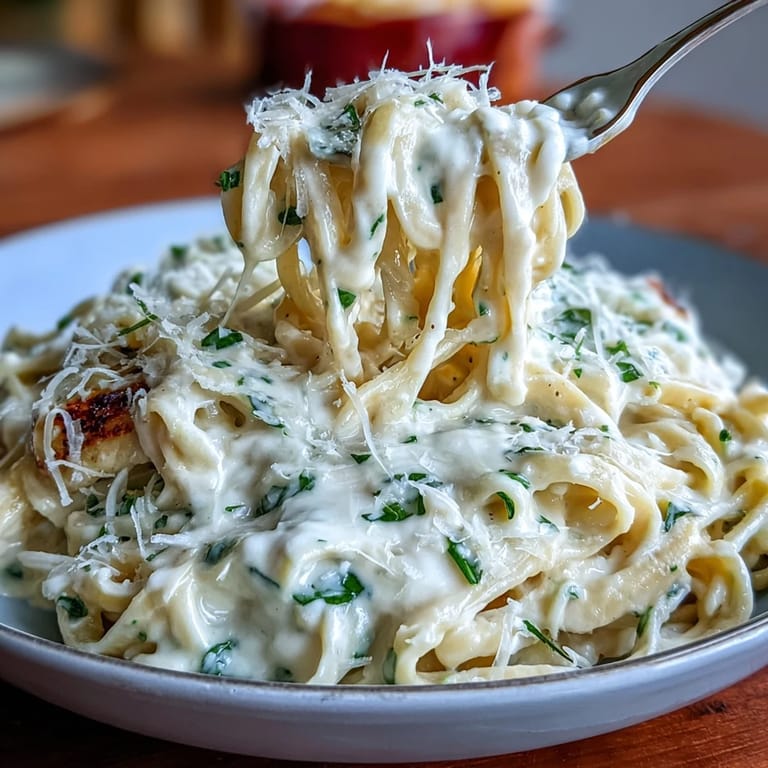
Save This pasta has become one of those recipes I return to again and again, not because it's fancy or complicated, but because it somehow feels both nourishing and indulgent at the same time. I hope it brings that same quiet joy to your kitchen that it's brought to mine.
Recipe FAQs
- → What makes the cauliflower sauce creamy without heavy cream?
The natural starches released from cooked cauliflower create a velvety texture when blended. Adding butter and Parmesan enriches the consistency while keeping it lighter than traditional cream-based sauces.
- → Can I make this Alfredo dairy-free or vegan?
Yes. Substitute plant-based milk for dairy milk, use vegan butter instead of regular butter, and replace Parmesan with nutritional yeast or vegan Parmesan alternative. The sauce remains creamy and satisfying.
- → What pasta shapes work best with this sauce?
Fettuccine and linguine are ideal because their flat surfaces hold the sauce beautifully. However, penne, rigatoni, or even spaghetti work well. Choose whole wheat or gluten-free pasta if preferred.
- → How do I store and reheat leftovers?
Store in an airtight container in the refrigerator for up to 3 days. Reheat gently on the stovetop with a splash of milk or pasta water to restore creaminess. The sauce may thicken when cold but loosens nicely when warmed.
- → Can I add protein or extra vegetables?
Absolutely. Grilled chicken, shrimp, or white beans complement the flavors beautifully. Sautéed mushrooms, steamed broccoli, or roasted bell peppers also make excellent additions while maintaining the light character of the dish.
- → Why should I reserve pasta water?
Pasta water contains starch that helps bind the sauce to the noodles. Adding a splash while tossing creates a silky, emulsified coating that clings perfectly to every strand of pasta.