 Save
Save Blood oranges arrived at the market in winter, and I was immediately drawn to their jewel-like color. That same afternoon, I had halloumi waiting in my fridge from a Mediterranean craving two days prior. The combination felt obvious once I started thinking about it—warm, salty cheese against bright citrus, the kind of contrast that makes your mouth wake up. I grabbed some sourdough that needed using and suddenly this salad assembled itself in my head, fully formed.
I made this for a dinner party last February when a friend mentioned she'd never had halloumi before. Watching her face when she bit into that warm, squeaky cheese alongside the tart blood orange was worth every minute of prep. She asked for the recipe before dessert even hit the table, which felt like the highest compliment possible.
Ingredients
- Halloumi cheese, 200 g sliced into 1 cm thick pieces: This is the star—it has a high melting point, so it fries rather than melts into a puddle, creating those golden, crispy edges while staying creamy inside.
- Blood oranges, 2 peeled and segmented: Their deep color and slightly more complex flavor beat regular oranges; they're worth seeking out, but regular oranges work if you're in a pinch.
- Mixed salad greens, 150 g (romaine, arugula, parsley, mint): The mint and parsley lift everything with freshness—don't skip them for bland lettuce alone.
- Cucumber, 1 small diced: Keep the skin on for color and texture; it adds a cooling element that balances the warm cheese.
- Cherry tomatoes, 8 halved: Choose ones that are actually ripe and flavorful, not those watery supermarket varieties that taste like water.
- Red onion, ½ small thinly sliced: Slice it thin so it doesn't overpower; it adds a sharp bite that cuts through the richness beautifully.
- Radishes, 2 thinly sliced: They're often overlooked, but their peppery crunch becomes essential once you taste them in this salad.
- Sourdough bread, 2 thick slices cut into cubes: Day-old bread works better than fresh; it crisps up instead of turning hard and stale.
- Olive oil for croutons, 2 tbsp: Good quality matters here since it's not being heated much—use what you'd actually eat with bread.
- Extra virgin olive oil for dressing, 3 tbsp: This is your dressing's backbone, so don't grab the cheap stuff.
- Fresh lemon juice, 1½ tbsp: Squeeze it fresh; bottled tastes flat and vaguely chemical by comparison.
- Pomegranate molasses, 1 tbsp: This is the secret ingredient that makes people ask what you did differently—it's tangy, complex, and absolutely worth keeping in your pantry.
- Sumac, 1 tsp: If you can't find it, a tiny bit of extra lemon juice substitutes, but sumac adds a distinctive brightness that's genuinely its own thing.
- Sea salt and black pepper to taste: Don't undersalt; this salad needs proper seasoning to sing.
Tired of Takeout? 🥡
Get 10 meals you can make faster than delivery arrives. Seriously.
One email. No spam. Unsubscribe anytime.
Instructions
- Toast your croutons first:
- Preheat your oven to 200°C and toss those sourdough cubes in olive oil and a pinch of sea salt. Spread them on a baking tray and let them go for about 8 to 10 minutes until they're golden and crispy on the outside. You'll know they're ready when they smell toasty and look like little golden nuggets.
- Fry the halloumi until it's golden:
- Heat a non-stick skillet over medium heat and place your halloumi slices in there—you'll hear them immediately start to sizzle, which is exactly what you want. Give them 2 to 3 minutes per side until they develop a gorgeous golden crust, then transfer them to a paper towel for just a minute to drain any excess oil.
- Assemble your salad base:
- In a large bowl, combine your salad greens, diced cucumber, halved cherry tomatoes, sliced red onion, radishes, and blood orange segments. Keep everything rough and natural—this isn't about precision, it's about letting each component shine.
- Make your dressing:
- Whisk together your extra virgin olive oil, fresh lemon juice, pomegranate molasses, sumac, black pepper, and sea salt in a small bowl until everything is emulsified and unified. Taste it and adjust—it should be bright, tangy, and make your mouth water.
- Bring it all together:
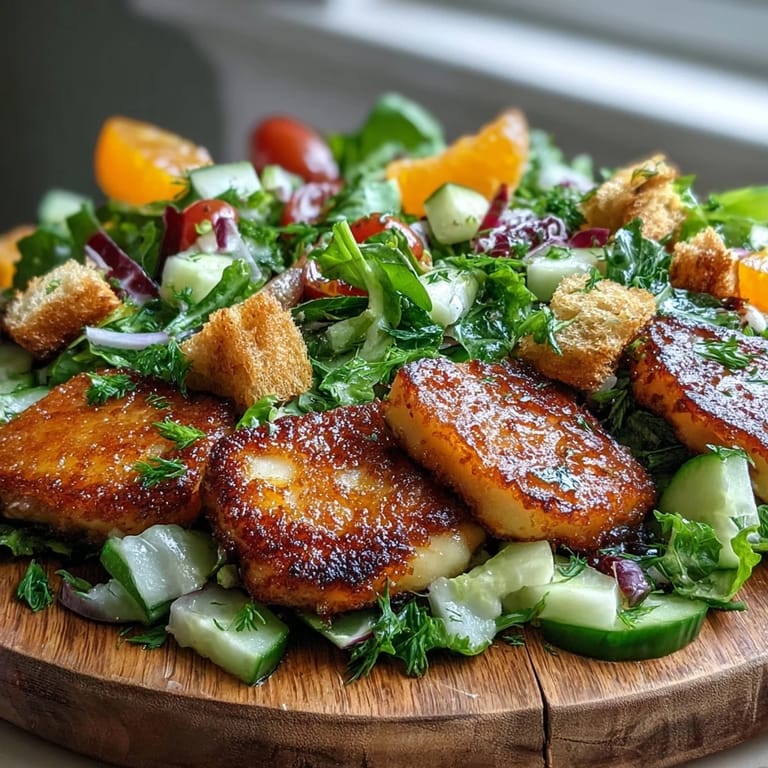
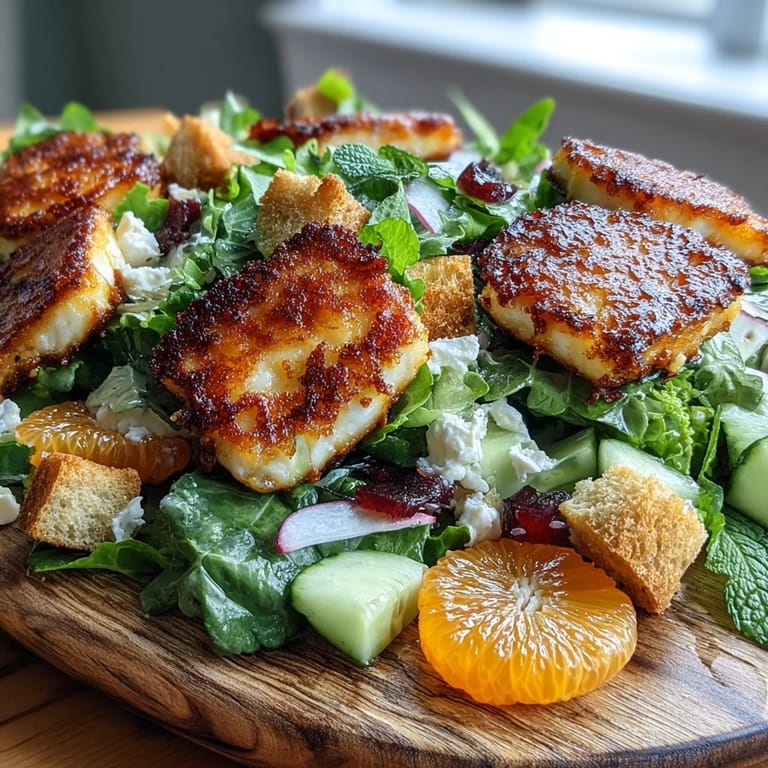
- Add your warm halloumi slices and those toasted croutons to the salad bowl, then drizzle everything with your dressing. Toss gently so the warm cheese doesn't get buried; you want it visible and celebrated on top.
- Serve immediately:
- The magic of this salad is in the contrast between warm and cool, so don't let it sit around. Get it on plates while the halloumi is still giving off that gentle warmth.
 Save
Save 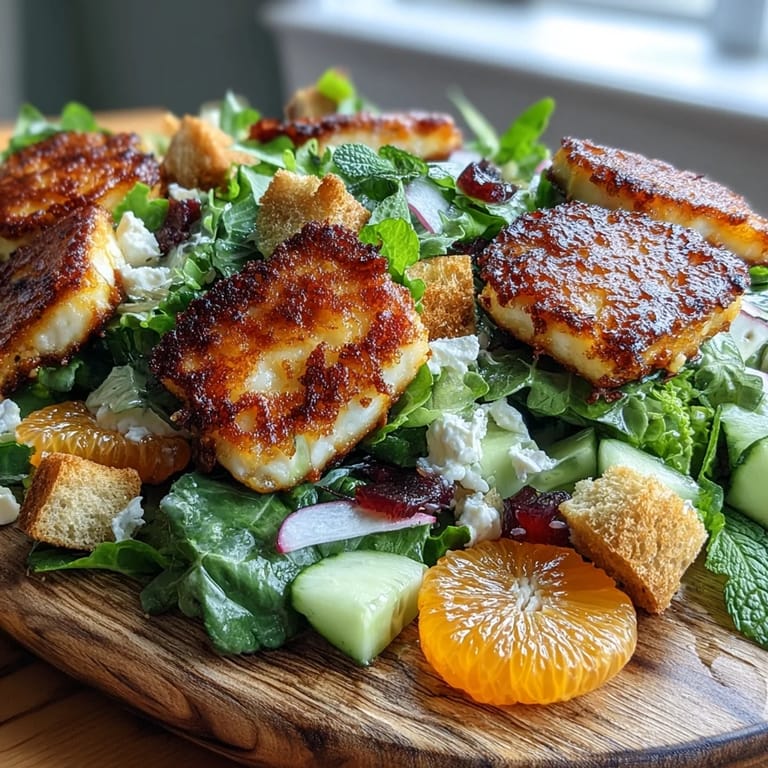 Save
Save There's a moment, always, when everything on the plate is warm and cold and crispy and soft all at once, and you take that first bite and remember why you bother cooking at all. That's what this salad does—it's the kind of dish that makes you slow down.
Why Blood Oranges Deserve Your Attention
Blood oranges show up for just a few months each year, and when they do, I buy them recklessly. Their flavor is deeper than regular oranges, less aggressively sweet, with this subtle berry undertone that makes them feel almost luxurious. In a salad like this, they're not just a garnish—they're doing the heavy lifting of making every other ingredient taste better.
The Secret Power of Pomegranate Molasses
Most people have never heard of pomegranate molasses, which is a shame because it's genuinely transformative. It's essentially pomegranate juice that's been reduced down to a thick, tangy syrup, and it adds this complex sourness that lemon juice alone can't achieve. Once you start keeping a bottle around, you'll find yourself adding it to vinaigrettes, drizzling it over roasted vegetables, even whisking it into cocktails.
Building Layers of Flavor and Texture
This salad works because nothing in it is trying to do the same job. The halloumi is warm and salty, the blood orange is bright and juicy, the croutons add crunch, and the greens provide a leafy base that makes you feel virtuous. The dressing ties it all together with its tart, slightly exotic flavor profile that feels both comforting and adventurous at the same time.
- If you can find pomegranate seeds, scatter them over the top just before serving for color and extra tartness.
- Toasted pistachios or walnuts add another layer of crunch if you want to take this from dinner salad to show-off territory.
- A crisp white wine like Sauvignon Blanc will make you feel like you're eating somewhere with ocean views.
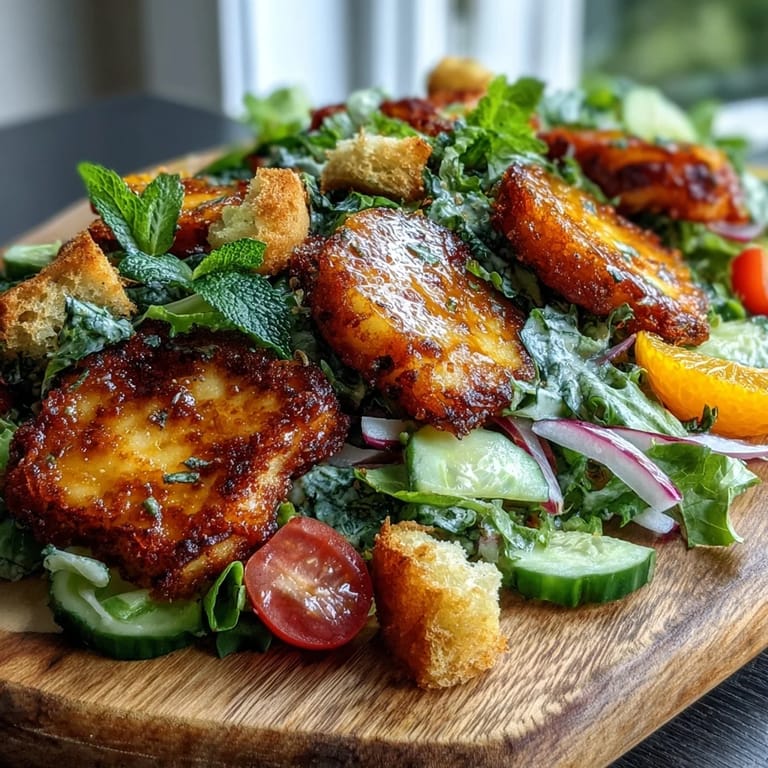 Save
Save 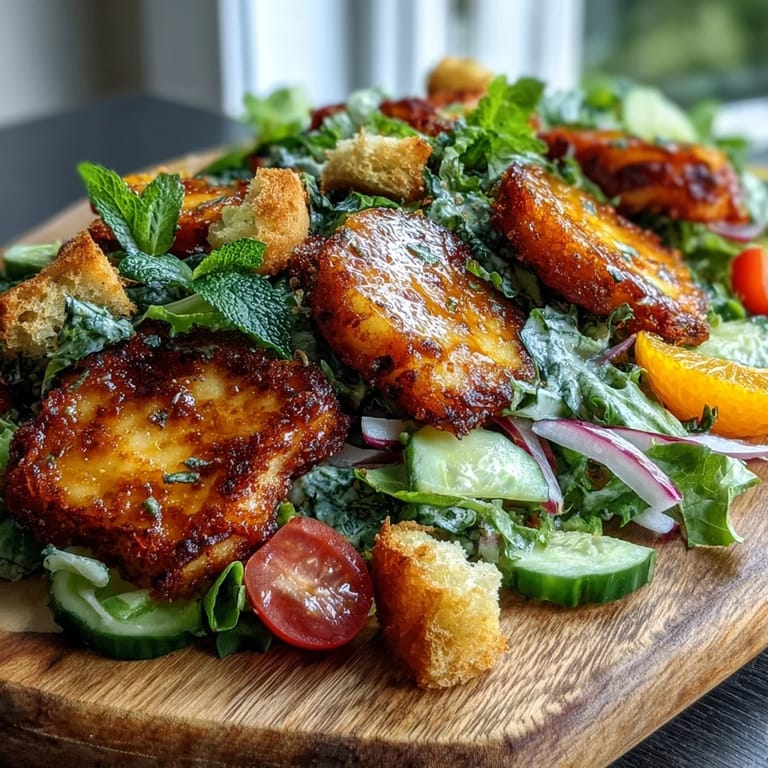 Save
Save This is the kind of salad that reminds you cooking doesn't have to be complicated to feel special. Throw it together when you want to eat something that tastes like it took more effort than it did.
Recipe FAQs
- → What makes fattoush different from other salads?
Fattoush is a Middle Eastern salad traditionally featuring crispy bread pieces mixed with fresh vegetables and herbs. This version adds golden halloumi and blood oranges for extra protein and citrus brightness.
- → Can I make this salad ahead of time?
Prepare the dressing and croutons in advance, but assemble the salad just before serving. The halloumi is best served warm, and the greens stay crisp when dressed immediately before eating.
- → What can I substitute for halloumi?
Paneer or firm feta work well as alternatives. For a vegan option, try fried extra-firm tofu or simply omit the cheese and add more nuts or seeds for protein.
- → Is sumac essential for this dish?
Sumac provides a tangy, lemony flavor that's characteristic of Middle Eastern cuisine. If unavailable, add extra lemon juice or a pinch of za'atar spice blend as a substitute.
- → How do I prevent the croutons from getting soggy?
Bake the sourdough cubes until thoroughly golden and crispy. Let them cool completely before adding to the salad, and dress just before serving to maintain their crunch.
- → Can I grill the halloumi instead of frying?
Absolutely! Grilling halloumi adds a lovely smoky char. Brush the slices with a little oil and grill for 2-3 minutes per side until you see golden grill marks.